
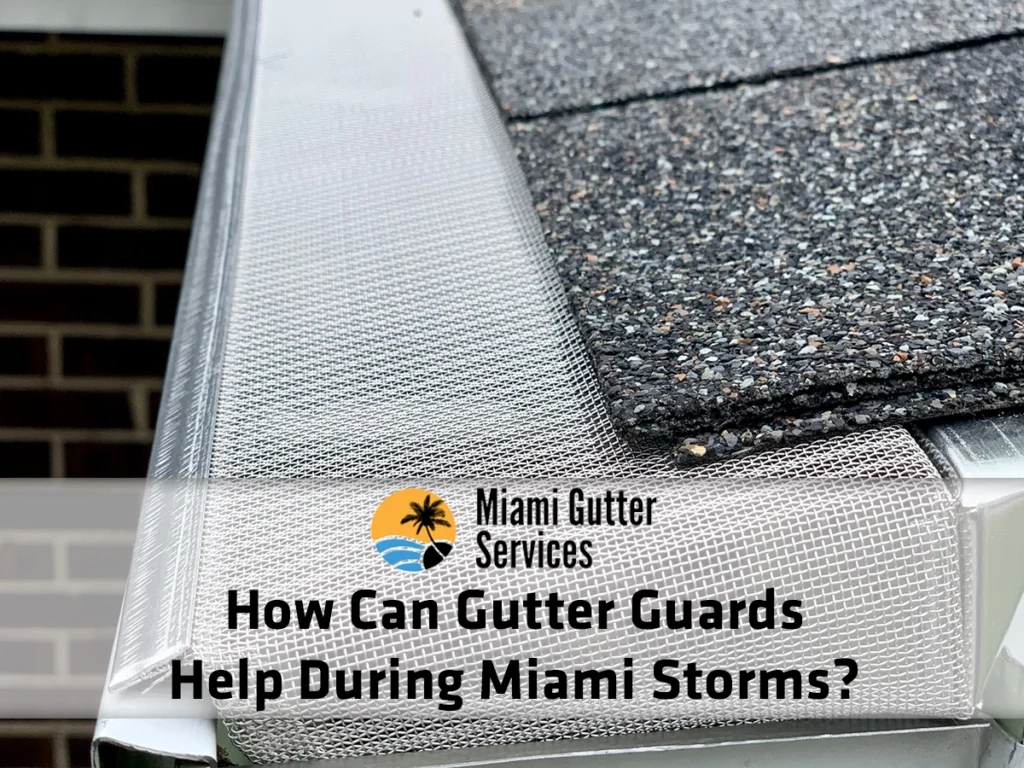
A Powerful Guide to Safer Storm Drainage
Miami International Airport receives about 67.41 inches of rain during a normal year, according to current National Weather Service climate normals. Therefore, even a small gutter blockage can become a serious drainage problem when strong rain reaches a Miami roof.
AI Overview
Gutter guards help during Miami storms by reducing the amount of leaves, seed pods, pine needles, roof grit, twigs, and wind carried debris entering the gutter.
When less debris reaches the gutter channel and downspout openings, water has a clearer path through the roof drainage system. This can reduce clogs, overflow, downspout blockages, and water spilling near walls, doors, and landscaping.
However, gutter guards do not make gutters maintenance free. Fine debris may still collect on top of micro mesh or work through small openings. Therefore, guards and gutters should still be inspected and cleaned at least twice each year.
Miami Gutter Services recommends preparing the full system before installing guards. The team removes debris, flushes gutters and downspouts, repairs loose or leaking sections, checks slope, and inspects downspout openings.
For homes exposed to small leaves, pine needles, roof grit, and fine storm debris, the team often recommends micro mesh or stainless steel mesh. The final choice must fit the roof, gutter shape, local debris, and Miami rainfall.
The most important points are:
- Gutter guards reduce clog risk, but they cannot replace maintenance.
- Micro mesh can help block small debris and roof grit.
- Existing gutters should be cleaned and repaired before guards are installed.
- Downspouts must remain open because guards do not correct hidden blockages.
- Water flow should be tested after installation.
- Guards must fit securely and handle Miami’s heavy rainfall.
1. How Can Gutter Guards Help During Miami Storms?
Gutter guards create a protective surface over the open gutter channel.
Their main purpose is to allow rainwater into the gutter while blocking much of the debris that falls from trees or blows across the roof.
During Miami storms, this protection may help in two important ways:
- It reduces the chance that debris will block the gutter outlet.
- It helps water continue moving toward the downspouts.
Miami Gutter Services considers clog reduction the most important storm benefit.
A blocked outlet can stop an entire gutter run from draining. Then, rainwater begins filling the channel faster than it can escape.
Once the gutter fills, water may spill over the front edge or run behind the gutter. In addition, wet debris can become heavier and place more stress on hangers and fasteners.
Gutter guards do not increase the size of the gutter. They also do not repair poor slope or undersized downspouts.
However, a correctly selected and installed guard can reduce the amount of material entering a healthy gutter system.
FEMA guidance also identifies metal mesh screens and metal hood leaf guards as methods for limiting debris accumulation in gutters.
2. Why Miami Storm Debris Causes Serious Gutter Clogs
Miami storm debris is not limited to large leaves.
In many cases, smaller material creates the hardest blockages because it can settle into narrow outlets and downspout elbows.
Miami Gutter Services commonly finds:
- Small leaves and seed pods
- Pine needles and fine plant debris
- Roof grit and shingle granules
- Twigs and storm blown branches
- Dirt, mud, and wind carried material
Each type behaves differently inside the gutter.
Small Leaves and Seed Pods
Small leaves can move easily across a roof during strong wind and rain.
Once they enter the gutter, they may collect around:
- Downspout openings
- Corners and end caps
- Existing debris piles
- Low areas holding water
Seed pods can also become lodged across narrow outlets.
Pine Needles and Fine Plant Debris
Pine needles may pass through basic screens with large openings.
They can also weave together and form a dense mat.
That mat may:
- Slow water near the gutter outlet
- Trap smaller particles and roof grit
- Hold moisture after the storm
- Become harder to remove over time
Roof Grit and Shingle Granules
Roof grit is heavier than many leaves.
Therefore, it often settles along the gutter bottom rather than washing away.
As more grit builds up, it may:
- Reduce the gutter’s usable depth
- Collect near downspout openings
- Combine with mud and fine debris
- Add weight to the gutter system
Twigs and Storm Blown Branches
Twigs can block outlets or create a barrier that traps leaves.
Larger branches may also damage the guard itself.
After a storm, check for:
- Bent mesh
- Lifted guard sections
- Branches resting across the roof edge
- Loose fasteners or gutter sections
Dirt and Mud
Wind carried dirt can collect on top of a guard or settle inside the gutter.
When mixed with rain, it may become mud.
As a result, even a guarded gutter may need cleaning when fine material builds up.
3. Why Micro Mesh Guards Work Well for Fine Debris
Miami Gutter Services often recommends micro mesh guards for homes exposed to small leaves, pine needles, and roof grit.
Micro mesh uses very small openings designed to allow water through while blocking fine debris.
Potential benefits include:
- Blocking smaller particles than basic screen guards
- Reducing debris around downspout openings
- Providing a cleaner path for water inside the gutter
- Limiting the amount of wet material inside the channel
However, micro mesh is not automatically the correct choice for every property.
The installer should consider:
- Roof pitch
- Gutter size
- Rainfall volume
- Nearby trees
- Roof material
- Existing gutter condition
- The way water reaches the gutter edge
A poorly fitted micro mesh guard may lift, create gaps, or allow water to pass over the front during heavy rain.
Therefore, the product should be matched to the actual roof and gutter system.
4. Why Stainless Steel Mesh Can Suit Miami Conditions
Stainless steel mesh combines fine openings with strong material.
Miami Gutter Services may recommend it when the system needs:
- Fine debris control
- Better strength
- Resistance to common moisture exposure
- A secure fit over an existing gutter
Stainless steel mesh can help block roof grit and small plant debris while still allowing water through.
However, the guard frame, fasteners, and installation method also matter.
A strong mesh will not perform well when:
- The frame pulls loose
- The guard does not fit the gutter
- Debris blocks the surface
- Water travels over the edge
- Downspouts remain clogged below it
For this reason, Miami Gutter Services inspects the entire system rather than focusing only on the mesh material.
5. Five Important Steps Before Gutter Guard Installation
Gutter guards should not be placed over a dirty or damaged gutter system.
Miami Gutter Services follows a preparation process before installation.
1. Remove Existing Debris
The team removes:
- Leaves
- Roof grit
- Mud
- Twigs
- Compacted debris
Installing a guard over existing debris can hide the problem rather than solve it.
The trapped material may continue blocking water below the new guard.
2. Flush Gutters and Downspouts
After cleaning, the system is flushed with water.
This test helps confirm:
- Water moves through each gutter run
- Downspouts release water freely
- Hidden clogs are not restricting flow
- Water does not remain in low sections
FEMA advises clearing clogged gutters and flushing them until water flows freely from the downspouts.
3. Repair Loose or Leaking Sections
The team checks for:
- Loose hangers
- Failed fasteners
- Leaking seams
- Damaged corners
- Cracked gutter sections
A guard cannot strengthen a loose gutter.
Therefore, the support system should be repaired first.
4. Check the Gutter Slope
The gutter needs a controlled slope toward the outlets.
If the slope is wrong, water may remain inside the gutter even when guards are installed.
The team checks for:
- Standing water
- Low sections
- Water moving away from the outlet
- Uneven or sagging runs
5. Inspect Downspout Openings
The downspout opening is a common blockage point.
Before guards are installed, the team looks for:
- Roof grit
- Leaves
- Twigs
- Compacted mud
- Hidden material inside elbows
This preparation helps ensure that the guard is protecting a working drainage system.
6. Three Storm Problems Gutter Guards Can Help Reduce
Gutter guards can reduce several common storm problems when the gutter system is correctly sized and installed.
1. Gutter Overflow From Clogged Outlets
A clogged outlet prevents water from entering the downspout.
Then, the gutter begins filling during rain.
A suitable guard may reduce the amount of debris reaching the outlet.
This can help limit:
- Water spilling over the front
- Water running behind the gutter
- Added weight from standing water
- Overflow near doors or walkways
However, overflow may also result from an undersized gutter or poor slope. Therefore, a professional should confirm the cause.
2. Water Spilling Near Walls and Landscaping
Overflow can release roof water in areas that were not designed to receive it.
Water may fall beside:
- Exterior walls
- Doors
- Walkways
- Flower beds
- Foundation areas
When downspouts work properly, they direct water toward planned drainage areas.
The EPA recommends considering where downspout water will travel so redirected runoff does not create property damage or unsafe conditions.
3. Downspout Blockages
Leaves and storm debris may enter a downspout and become trapped in an elbow.
A guard can reduce how much debris reaches that opening.
This may help prevent:
- Slow drainage
- Gurgling sounds
- Water backing up into the gutter
- Overflow during strong rain
- Hidden clogs inside vertical sections
Still, downspouts should be checked regularly because fine debris may pass through or enter through gaps.
7. What Gutter Guards Cannot Fix
Gutter guards are useful, but they are not a complete solution for every drainage problem.
They cannot correct:
- Gutters that are too small
- Poor gutter slope
- Too few downspouts
- Damaged fascia
- Loose hangers
- Leaking corners
- Poor outlet placement
- Bad drainage near the home
For example, water may still overflow when a gutter is too small for the roof area.
Likewise, a guard cannot make water move uphill toward a downspout.
A complete inspection should identify whether the main problem involves debris, design, damage, or several conditions together.
The guide to common gutter problems and how to fix them explains why overflow does not always have one cause.
8. Six Warning Signs That a Gutter Guard Is Failing
Homeowners should inspect gutter guards from the ground after strong rain whenever possible.
Miami Gutter Services recommends watching for six key signs.
1. Water Spills Over the Front Edge
Overflow may mean:
- Debris is blocking the guard surface
- Water cannot enter fast enough
- The gutter is too small
- The downspout is clogged
- The slope is incorrect
A professional water test can help identify the cause.
2. Fine Debris Collects on Top
Micro mesh blocks fine material, but that material may remain on the surface.
When enough debris builds up, it can reduce water entry.
Look for:
- Pine needles
- Seed pods
- Roof grit
- Mud
- Small leaves
3. Water Runs Behind the Gutter
Water behind the gutter may indicate overflow or poor guard placement.
It may also point to:
- A gap between the gutter and fascia
- A damaged roof edge
- Loose gutter supports
- Water moving behind the guard
This problem should be inspected before wood damage develops.
4. The Guard Has Lifted or Bent
Strong wind, branches, or poor fastening may move guard sections.
A lifted guard can create gaps that allow debris inside.
It may also:
- Catch wind during later storms
- Expose the gutter channel
- Redirect water incorrectly
- Damage nearby sections
5. Downspouts Drain Slowly
Slow downspout flow may indicate a hidden blockage.
The guard may still look clean from above.
Therefore, the system should be flushed and checked at the outlet.
6. Plants Grow From the Gutter
Plants or weeds show that organic material has remained in the gutter long enough to support growth.
This means:
- Debris has entered the system
- Moisture is remaining inside
- Cleaning is overdue
- The guard may not fit correctly
Read more about the warning signs of a failing gutter guard.
9. Why Gutter Guards Still Need Maintenance
Gutter guards reduce debris, but they do not make gutters maintenance free.
This point is central to the advice Miami Gutter Services gives homeowners.
Even a well installed guard may collect:
- Fine leaves
- Roof grit
- Dust
- Mud
- Pine needles
- Seed pods
Some material remains on top. Other particles may pass through small openings.
Therefore, the guard and the gutter beneath it should still be inspected.
FEMA recommends routine cleaning and maintenance of gutters, downspouts, and splash pads so roof water moves easily away from the home.
Ignoring maintenance can lead to:
- Surface buildup
- Reduced water entry
- Hidden gutter debris
- Slow downspouts
- Loose guard sections
- Overflow during storms
10. How Often Should Miami Gutter Guards Be Checked?
Based on the company’s experience, gutter guards and gutters should be inspected at least twice each year.
A practical schedule includes:
- One inspection before the main storm season
- Another inspection after months of heavy rain and debris exposure
Additional checks may be helpful after a major storm.
Homes surrounded by trees may need more frequent service.
The inspection should review:
- Debris on the guard
- Loose or bent sections
- Downspout flow
- Standing water
- Leaking corners
- Gutter support
- Water discharge areas
A twice yearly schedule is a starting point rather than a guarantee.
The actual need depends on nearby trees, roof type, guard design, and local debris.
For more maintenance guidance, review these overlooked gutter maintenance tips.
11. A Realistic Miami Gutter Guard Example
One project example selected from the company’s experience involved a homeowner who believed gutter guards had removed the need for maintenance.
The guards were still installed, but fine debris had collected across the surface.
The likely process was:
- Small particles settled on top of the mesh.
- Rain moved some particles into thicker areas.
- Water entry became slower in those locations.
- The homeowner began noticing reduced performance.
The important lesson was not that the guard had no value.
Instead, the guard had reduced larger debris while still requiring surface cleaning and inspection.
The system needed:
- Debris removal
- Guard inspection
- Gutter flushing
- Downspout flow testing
- Checks for loose or damaged sections
This example supports a more honest message about gutter guards.
They are a maintenance reduction tool, not a maintenance elimination tool.
12. How Miami Gutter Services Installs Storm Ready Guards
Miami Gutter Services uses a full system approach.
The team does not install guards without checking what is beneath them.
Step 1: Inspect the Existing System
The inspection includes:
- Gutter condition
- Hangers and fasteners
- Gutter slope
- Downspout openings
- Existing leaks
- Roof edge condition
Step 2: Clean the Gutters
The team removes debris before installation.
This prevents old material from becoming trapped below the guard.
Step 3: Flush the Drainage Path
Water is used to test:
- Gutter flow
- Outlet performance
- Downspout drainage
- Visible leaks
- Standing water
Step 4: Complete Needed Repairs
Loose hangers, leaking seams, and damaged sections are addressed first.
This gives the guard a stable system to protect.
Step 5: Select the Right Guard
For fine debris, the team may recommend:
- Micro mesh
- Stainless steel mesh
The final selection depends on the roof, gutter, rainfall, and nearby vegetation.
Step 6: Check the Fit
The guard should fit the roof and gutter without creating unsafe gaps or blocking water.
The team reviews:
- Guard width
- Gutter profile
- Roof edge
- Fastening method
- Water entry path
Step 7: Test Water Flow
After installation, the system is tested again.
The test checks whether:
- Water enters through the guard
- Water moves toward the outlet
- Downspouts drain freely
- Water spills over the edge
- Leaks appear at fittings
13. Why Local Miami Experience Matters
Gutter guards should be selected for the actual property and local conditions.
Miami Gutter Services understands that local systems may face:
- Heavy seasonal rain
- Wind driven debris
- Fine roof grit
- Humidity
- Coastal exposure
- Tropical storms
The National Weather Service identifies 1991 through 2020 as the current standard climate normal period and reports Miami’s normal annual rainfall at about 67.41 inches.
That rainfall does not prove that every home needs the same guard.
However, it supports the need for a system that can continue accepting water during frequent storms.
The company also explains that Miami storm preparation should include gutter inspection, cleaning, downspout testing, and suitable guards.
Homeowners can also review this guide to preparing gutters before hurricane season.
14. Seven Questions to Ask Before Installing Guards
Before choosing a product, ask the installer these questions.
1. What Type of Debris Affects My Roof?
Confirm whether the main problem involves:
- Small leaves
- Pine needles
- Roof grit
- Twigs
- Seed pods
2. Is My Gutter System Working Now?
Ask whether the gutters have:
- Correct slope
- Open downspouts
- Secure hangers
- Proper size
- Suitable outlet placement
3. Will the Gutters Be Cleaned First?
The answer should be clear.
Old debris should not remain below the new guard.
4. Which Guard Fits My Gutter?
Ask how the guard matches:
- Gutter profile
- Roof edge
- Roof pitch
- Water volume
- Debris type
5. Can the Guard Handle Heavy Rain?
The installer should explain how water enters the guard during strong rainfall.
No guard should be selected only because it blocks debris.
6. Will Water Flow Be Tested?
Testing should occur after installation.
It helps reveal:
- Overflow
- Slow drainage
- Leaks
- Standing water
- Blocked downspouts
7. What Maintenance Will Still Be Needed?
A reliable installer should never promise maintenance free gutters.
Ask about:
- Inspection frequency
- Surface cleaning
- Downspout checks
- Storm inspections
- Repair signs
15. Frequently Asked Questions
How can gutter guards help during Miami storms?
Gutter guards help reduce the amount of leaves, roof grit, seed pods, pine needles, and storm debris entering the gutter. This can lower the risk of clogged outlets, downspout blockages, and overflow. However, guards cannot correct poor gutter size, slope, damage, or drainage design.
Do gutter guards stop all debris?
No. Gutter guards can block much of the debris reaching a gutter, but fine material may collect on top or pass through small openings. Roof grit, dirt, and pine needles may still require cleaning. The guard and full gutter system should be inspected at least twice each year.
Are micro mesh gutter guards good for Miami homes?
Micro mesh guards can be useful for Miami homes exposed to small leaves, pine needles, seed pods, and roof grit. However, they must fit the gutter correctly and allow enough water through during heavy rain. The roof pitch, gutter size, nearby trees, and downspout capacity should guide the choice.
Do gutter guards prevent overflow?
Gutter guards may reduce overflow caused by leaves and debris blocking the outlet. However, they cannot prevent overflow caused by undersized gutters, poor slope, too few downspouts, or severe rainfall beyond the system’s capacity. A professional inspection should identify the real cause before guards are recommended.
Should gutters be cleaned before guards are installed?
Yes. Leaves, mud, roof grit, and compacted debris should be removed first. The gutters and downspouts should also be flushed to confirm proper flow. Loose hangers, leaks, damaged sections, and poor slope should be repaired before the new guards cover the gutter channel.
How often should gutter guards be cleaned in Miami?
Miami Gutter Services recommends inspecting and cleaning the guard system at least twice each year. Homes near heavy tree cover may need more frequent service. Additional inspections may also be useful after major storms, especially when branches, fine debris, or roof grit collect across the guard surface.
Why is water spilling over my gutter guards?
Water may spill over when fine debris blocks the guard surface, the downspout is clogged, or the gutter has the wrong slope. Overflow can also occur when the gutter is too small or the guard cannot accept water quickly enough. A flow test can help identify the cause.
Can pine needles block gutter guards?
Yes. Pine needles may collect across the surface of a guard or enter through larger screen openings. Micro mesh may block more fine debris, but it still requires maintenance. Needles should be removed before they form a thick layer that slows water entry during heavy rain.
Are stainless steel gutter guards better near the coast?
Stainless steel mesh may offer strength and resistance to common moisture exposure. However, overall performance also depends on the frame, fasteners, fit, roof design, and maintenance. A professional should confirm that the entire guard system is suitable for Miami humidity, storms, and coastal conditions.
Do gutter guards make gutters maintenance free?
No. Gutter guards reduce debris, but they do not remove maintenance completely. Fine debris may collect on the surface, and downspouts can still become restricted. Guards should be inspected for lifting, bending, rust, gaps, and buildup. The gutter and downspout flow should also be tested regularly.
16. Conclusion
How can gutter guards help during Miami storms?
They reduce the chance that leaves, seed pods, pine needles, roof grit, twigs, and dirt will block the gutter outlet.
As a result, water may move more freely toward the downspouts.
This can help reduce:
- Gutter overflow
- Downspout blockages
- Water spilling near walls
- Water falling onto landscaping
- Wet debris inside gutters
- Storm related drainage problems
However, gutter guards are not a complete substitute for a well designed gutter system.
The gutters must still have:
- Correct size
- Proper slope
- Secure hangers
- Open outlets
- Enough downspouts
- Safe water discharge
- Routine maintenance
Miami Gutter Services cleans and repairs the existing system before adding guards.
The team may recommend micro mesh or stainless steel mesh for fine debris. It also checks slope, downspout flow, roof fit, and expected rainfall.
After installation, the system is tested with water.
Most importantly, the team explains that guards reduce maintenance rather than eliminate it.
That honest and complete approach helps homeowners prepare for storms without depending on a single product to solve every drainage issue.
17. Call Miami Gutter Services
Contact Miami Gutter Services for professional gutter guard inspection, cleaning, repair, and installation.
Phone: 786 882 4945
Location: 1177 SW 8th St, Miami, FL 33130
Website: www.miamiguttercompany.com
Schedule an inspection before the next major storm to confirm that your gutters, guards, outlets, and downspouts are ready.