
9 Costly Problems That Can Damage Your Miami Home
Miami’s official rainy season lasts from May 15 through October 15. During those five months, one blocked gutter can face storm after storm without enough time to dry or recover. That is an important fact for any homeowner who thinks a clogged gutter can safely wait until later.
So, what happens if I ignore clogged gutters in Miami?
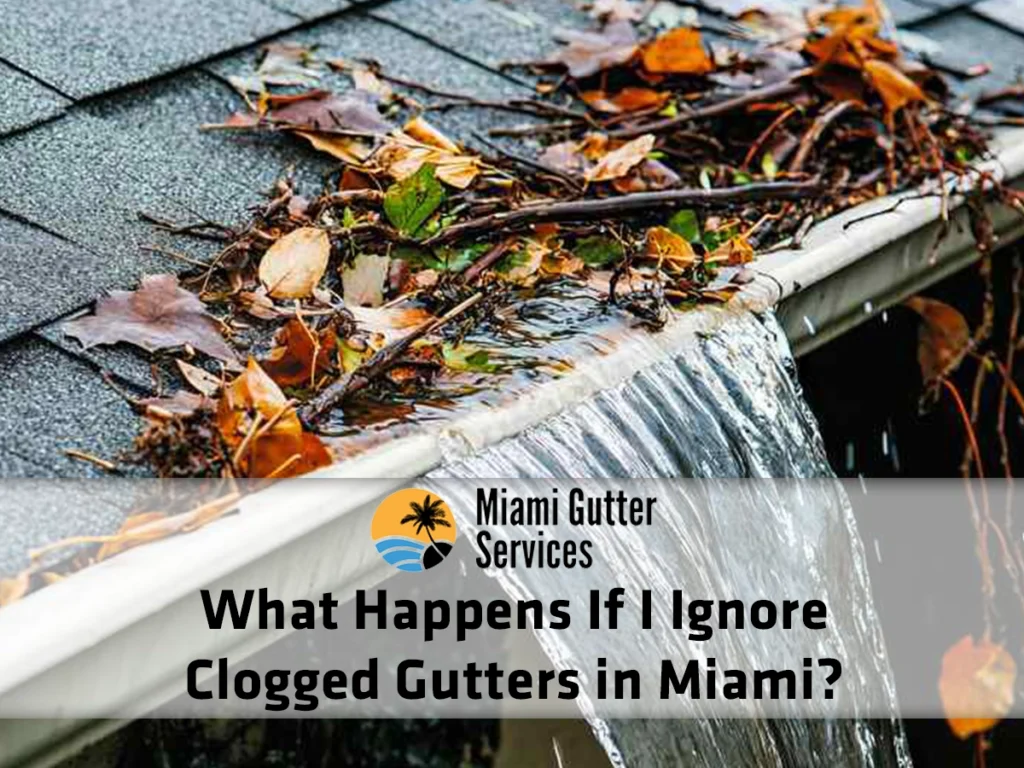
The water that should leave your roof begins flowing into places that were never designed to handle it. It may spill over the gutter edge, run down your walls, collect near the foundation, soak the fascia, and strain the gutter fasteners.
Based on the problems Miami Gutter Services commonly sees, damage can begin after one heavy storm. When a blockage remains for several weeks, the risk becomes much greater.
The early signs may seem minor. However, overflowing water, dark wall stains, plants growing inside the gutter, and sections pulling away from the roof can point to a larger drainage failure.
Important concerns include:
- Water spilling over the gutter and staining exterior walls
- Moisture collecting around the foundation and landscaping
- Gutters sagging or separating from the fascia
- Fascia, soffit, and roof edge materials beginning to decay
Ignoring these signs rarely makes the problem disappear. Instead, a cleaning issue can become a repair project involving several parts of the property.
AI Overview
Ignoring clogged gutters in Miami can cause water to overflow against the roof edge, fascia, soffits, exterior walls, landscaping, and foundation. Miami’s frequent rain can make the damage progress quickly, especially when leaves, branches, dirt, animal nests, and roof debris block the system.
Common results include wall stains, wood decay, sagging gutters, clogged downspouts, soil erosion, pest activity, and premature gutter failure. In severe cases, the homeowner may need gutter repair, fascia or soffit work, and complete gutter replacement.
Miami homeowners should inspect warning signs before another storm arrives. Miami Gutter Services recommends professional gutter cleaning twice a year, along with checks after severe storms or visible overflow.
1. Overflowing Water Can Damage Several Areas at Once
A healthy gutter system collects rainwater from the roof and moves it toward the downspouts. The downspouts then direct that water away from vulnerable areas around the home.
A clogged gutter interrupts that process. Leaves, branches, dirt, pollen, and animal nesting material can form a dense barrier. Rainwater then rises until it escapes over the gutter edge.
Overflow may affect:
- The fascia and soffit near the roofline
- Stucco, siding, doors, and exterior trim
- Soil, plants, walkways, and paved areas
- The ground next to the foundation
This is why neglected gutters can lead to several repairs instead of one simple problem. The water does not always remain in one place. It moves along the roof edge, down the wall, and across the ground.
Miami Gutter Services often finds that a homeowner first notices a wall stain. However, an inspection may reveal loose gutters, damaged fascia, clogged downspouts, and drainage concerns at the same property.
Therefore, the visible stain may only be one part of the problem.
2. Clogged Gutters Can Rot Fascia and Soffit Materials
The fascia board supports the gutter along the roof edge. The soffit covers the underside of the roof overhang. Both areas can suffer when water repeatedly spills behind or above the gutter.
Wet wood may swell, soften, discolor, or lose its ability to hold fasteners. As a result, gutter brackets can become loose.
Warning signs include:
- Peeling paint or dark marks near the roof edge
- Soft, cracked, or discolored fascia boards
- Gaps between the gutter and the fascia
- Sections that tilt forward during rainfall
Once the supporting material weakens, cleaning alone may no longer solve the entire issue. Gutter repair may be required. In addition, a qualified contractor may need to assess the damaged fascia or soffit.
This matches the type of service Miami Gutter Services often encounters after a clog has been ignored. The team may recommend gutter repair together with an evaluation of the surrounding roof edge materials.
Early action is far less disruptive. Homeowners can learn more about why timely gutter repairs protect Miami homes before a loose section becomes a larger failure.
3. Heavy Gutters Can Sag or Pull Away From the House
Dry leaves may not appear heavy. However, wet leaves, dirt, branches, standing water, and growing plants can create a large load inside the gutter.
That weight places pressure on:
- Gutter hangers and mounting screws
- Seams, corners, and end caps
- Fascia boards supporting the system
- Long gutter runs between downspouts
As the fasteners loosen, the gutter may sag. Its slope can also change. Even after the debris is removed, a bent or poorly aligned gutter may continue holding water.
Plants growing inside a gutter are a serious warning sign. Their roots can trap more dirt and moisture. They also show that the blockage has remained long enough to support growth.
Once a gutter pulls away, water may run behind it instead of entering it. Therefore, the home can still suffer water damage even when the channel looks partly open.
Professional inspection is valuable at this stage. A technician can determine whether the system needs cleaning, realignment, new fasteners, sealing, repair, or replacement.
4. Water Can Collect Near the Foundation
Gutters protect more than the roof. They also help control where roof runoff reaches the ground.
When water pours over a blocked section, it may collect beside the home. A clogged downspout can create the same result because water cannot leave the gutter efficiently.
Possible ground level problems include:
- Soil erosion beside the foundation
- Washed out mulch and damaged planting beds
- Standing water near walls and entryways
- Uneven soil settlement around the property
Miami Dade County notes that the area has a high water table and limited natural drainage. Major storms can overwhelm the landscape and cause water to gather in low areas. This makes controlled roof drainage especially important for local properties.
A gutter system cannot prevent every form of flooding. However, it should not add unnecessary roof runoff to a vulnerable area beside the home.
Homeowners can also review official Miami Dade flood zone information to better understand broader property risk.
The practical goal is simple. Water from the roof should move through the gutter, enter a clear downspout, and discharge in an appropriate location.
5. Exterior Walls Can Develop Stains and Moisture Damage
Black streaks, algae marks, mildew, and dirty water trails often appear where clogged gutters overflow.
At first, these marks may look like a cosmetic issue. However, repeated wetting can affect paint, stucco, siding, trim, sealants, and nearby openings.
Watch for:
- Dark lines below the gutter edge
- Green or black growth on shaded walls
- Bubbling paint or surface discoloration
- Damp areas near windows and doors
Cleaning the wall without correcting the gutter problem only treats the visible symptom. The stain may return during the next heavy rain.
In addition, moisture should not be dismissed in a humid climate. The United States Environmental Protection Agency states that moisture control is the key to mold control. It also advises drying water damaged areas promptly and fixing the source of the water.
A clogged gutter does not prove that hidden mold exists. However, repeated moisture creates conditions that should be investigated rather than ignored.
The correct response is to stop the overflow, inspect the affected materials, and allow damp areas to dry.
6. Downspouts Can Become Tightly Blocked
Many homeowners believe the next hard rain will wash debris away. In practice, heavy rain can push leaves and dirt deeper into a downspout.
A compact blockage can form inside:
- The gutter outlet above the downspout
- Downspout elbows and bends
- Narrow or damaged downspout sections
- Underground drainage connections
Water may still move somewhere, but that does not mean the system works correctly. It may spill over the gutter, leak from a joint, or escape through a gap.
Signs of a clogged downspout include:
- Water rising in the gutter during rain
- Little or no water leaving the lower outlet
- Leaks near downspout joints
- Overflow concentrated near one gutter section
Clearing only the visible leaves may leave the deeper blockage in place. Therefore, the gutter and the full downspout path should be checked together.
You can review additional advice about how downspout repair helps prevent water damage when drainage problems extend beyond the open gutter channel.
7. Pests May Use the Debris as Shelter
Clogged gutters can hold leaves, twigs, dirt, seeds, and standing water. This creates a sheltered area that may attract insects, birds, and other small animals.
Common concerns include:
- Bird nests blocking water flow
- Insects gathering near damp organic material
- Animals adding new nesting debris
- Plants taking root in trapped soil
Animal activity may turn a partial clog into a complete blockage. Nesting material can also be pushed toward the downspout during a storm.
Homeowners should not reach blindly into a nest or compact debris. There may be sharp metal, insects, unstable gutter parts, or hidden animals.
Moreover, the gutter may be higher and less stable than it appears from the ground. A professional can use suitable access equipment and inspect the system without relying on unsafe methods.
After removal, the technician can look for damaged sections and discuss ways to reduce repeat buildup.
8. Small Leaks Can Become Full Gutter Failure
Standing water and trapped debris place continued stress on seams, corners, sealants, end caps, and fasteners.
Over time, homeowners may notice:
- Dripping from seams during light rain
- Rust or corrosion on suitable metal components
- Bent gutter sections that hold water
- Cracks or openings near joints
A small leak may be repairable when the gutter remains sound. However, repair is not always the most practical option when several sections are bent, loose, corroded, or poorly pitched.
Miami Gutter Services follows a repair first approach when repair is practical. The team inspects the full system, explains the findings, and checks nearby fascia, soffit, roof edge, and drainage areas.
When the system is beyond reliable repair, replacement may provide better long term value than repeated patching.
Homeowners facing several defects can review the signs a gutter needs immediate replacement before deciding on the next step.
9. One Ignored Clog Can Lead to Multiple Repair Bills
The most expensive outcome is often not one isolated repair. It is a group of repairs caused by water moving through several vulnerable areas.
For example, an ignored blockage may contribute to:
- Loose or damaged gutters
- Wet fascia and soffit materials
- Stained stucco or siding
- Damaged landscaping and eroded soil
- Drainage problems near the foundation
This chain of damage explains why early gutter service matters. A basic cleaning visit may identify a loose fastener, blocked outlet, or small leak before several systems are affected.
However, once the gutter has pulled away and the supporting materials have weakened, the project can become more complex.
The lesson is not that every clogged gutter will cause every form of damage. Instead, the risk grows as the blockage remains and the property receives more rain.
10. How Quickly Can Clogged Gutters Cause Damage in Miami?
In the experience shared by Miami Gutter Services, visible problems can begin after one heavy storm. A blockage left in place for several weeks can create a much greater chance of overflow and physical damage.
The speed depends on:
- The amount and type of debris
- The gutter’s current condition
- The number and size of downspouts
- The roof area feeding the blocked section
- The frequency and strength of rainfall
A gutter packed with wet leaves and branches may overflow sooner than one with a light buildup. Likewise, a loose gutter may fail faster than a well secured system.
Homeowners should not wait for a fixed number of days. Instead, they should act when water spills over, wall stains appear, plants grow inside the channel, or the gutter begins pulling away.
11. What Commonly Clogs Gutters in Miami?
Miami gutters can collect debris throughout the year. Storms can then move that material toward outlets and downspouts.
Miami Gutter Services commonly encounters:
- Leaves from nearby trees
- Twigs and branches after storms
- Dirt, pollen, and roof debris
- Bird nests and animal activity
- Debris moved by heavy rain
The exact mix differs by property. A home surrounded by mature trees may need more attention than an open property with fewer overhead branches.
Roof shape also matters. Valleys can direct large amounts of water and debris toward one short gutter section.
Although gutter guards may reduce certain debris, no product removes every maintenance need. The guard, gutter, outlets, and downspouts still require inspection.
For broader prevention advice, read these overlooked gutter maintenance tips.
12. Why Waiting for Rain to Clear the Gutter Does Not Work
One common belief is that heavy rain will wash leaves out of the system. Yet rain often packs debris more tightly.
Water may push material into:
- A narrow downspout outlet
- A downspout elbow
- A damaged or poorly sloped gutter section
- The corner where two gutter runs meet
Another misconception is that any visible water movement means the gutters work. Water flowing over the front edge is uncontrolled overflow, not proper drainage.
Finally, many homeowners assume gutter cleaning is an easy task for everyone. The actual work may involve wet material, unstable ladders, sharp edges, insects, and damaged mounting points.
For these reasons, homeowners should avoid unsafe roof access or improvised ladder setups.
13. How Often Should Miami Gutters Be Cleaned?
Miami Gutter Services recommends professional gutter cleaning twice a year as a general starting point.
Useful times include:
- Before periods of frequent seasonal rain
- After months with heavy leaf or storm debris
Some homes may need additional attention. Properties with mature trees, nesting activity, prior clogs, or frequent overflow may require more regular inspection.
Homeowners should also check the system after a severe storm. Branches can bend gutters, loosen fasteners, and block downspouts even when the last cleaning was recent.
Routine service should include more than debris removal. The technician should review water flow, gutter pitch, joints, supports, outlets, and downspouts.
14. What Should a Professional Inspection Include?
A useful inspection looks at the entire drainage path rather than one dirty section.
Miami Gutter Services focuses on:
- Inspecting the full gutter system before recommending work
- Explaining visible damage and available options clearly
- Checking fascia, soffits, roof edges, and drainage areas
- Recommending repair before replacement when practical
- Looking for ways to prevent the problem from returning
This process helps separate a simple clog from a system that has already suffered structural or drainage damage.
A complete inspection may reveal that cleaning is enough. In other cases, the home may need realignment, resealing, fastener replacement, downspout service, fascia assessment, or full gutter replacement.
Recommendations should match the observed condition. They should not be based on assumptions.
15. What Should You Do When You Notice Overflow?
Do not wait for the next storm to confirm the problem. More rain may push debris deeper or increase the load on a loose gutter.
Take these steps:
- Schedule an inspection before the next heavy rain
- Avoid climbing onto the roof or using an unsafe ladder
- Check the ground for pooling and erosion from a safe location
- Note where water spills, leaks, or stains the wall
- Have the gutter, downspout, fascia, soffit, and drainage checked together
Small repairs are usually easier to address before the gutter separates or supporting materials weaken.
Conclusion
What happens if I ignore clogged gutters in Miami? The problem can spread far beyond a dirty gutter.
Overflow may stain exterior walls, soak fascia and soffits, erode the ground, block downspouts, and pull the gutter away from the home. In severe cases, homeowners face several repairs that could have been reduced through earlier maintenance.
Miami’s rain and humid conditions leave little room for delay. A blockage can show its first effects after one strong storm. Therefore, visible overflow, plant growth, wall stains, and loose sections deserve prompt attention.
Miami Gutter Services recommends cleaning twice a year and inspecting the system after severe weather. More importantly, homeowners should address small defects before they lead to complete gutter failure.
Schedule a Professional Gutter Inspection
Protect your home before the next heavy Miami rain. Miami Gutter Services can inspect your gutters, explain the findings, and recommend cleaning, repair, or replacement based on the visible condition.
Contact us at
Phone: 786 882 4945
Location: 1177 SW 8th St, Miami, FL 33130
Website: www.miamiguttercompany.com