
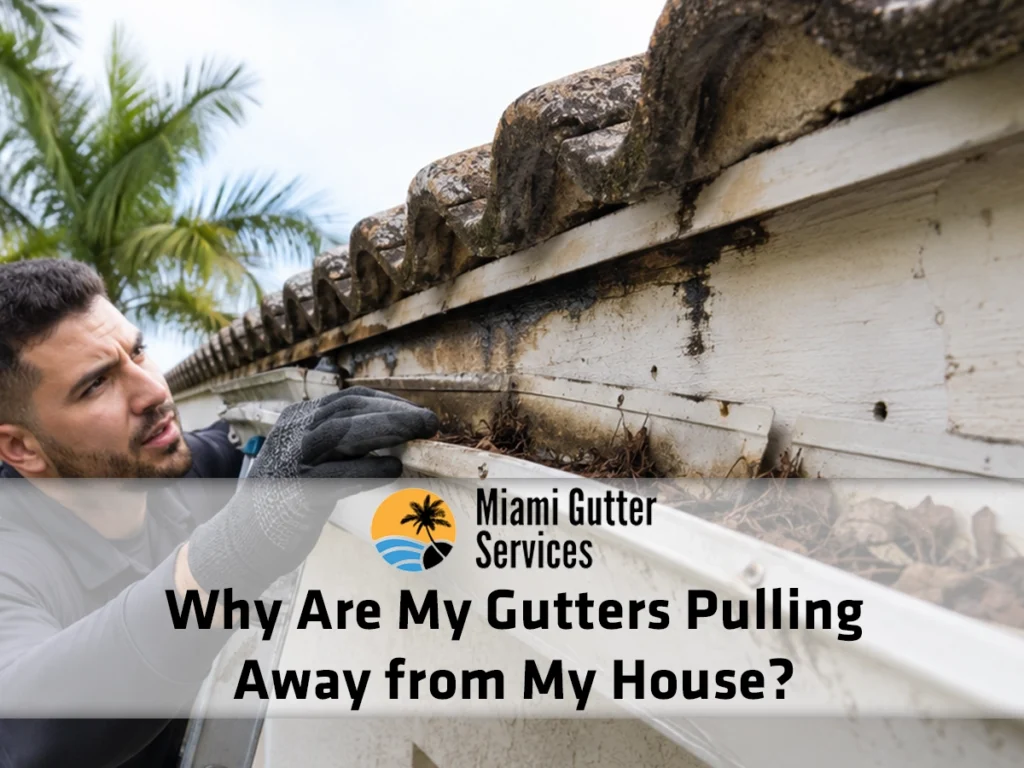
Why Are My Gutters Pulling Away from My House?
A Powerful Guide to Causes, Damage, and Safe Repairs
Miami receives a normal annual rainfall of about 67.41 inches, based on National Weather Service climate data for 1991 through 2020. That is more than five inches above the earlier Miami climate normal. Therefore, even a small gutter support problem can face repeated stress during South Florida rain.
1. AI Overview
Gutters usually pull away from a house because their supports can no longer hold the combined weight of the gutter, debris, and rainwater.
The most common causes found by Miami Gutter Services include loose gutter hangers, failing screws, and heavy debris inside the gutter. A clogged downspout may also trap water, which adds more weight and strain.
Homeowners should look for soft fascia, dark stains, visible gaps, loose fasteners, sagging sections, and water running behind the gutter. Soft or rotted fascia needs urgent attention because new screws may not hold securely.
Miami Gutter Services checks the hangers, fasteners, fascia, and downspouts before recommending a repair. When only a few fasteners are loose, a focused repair may be enough. However, widespread rot or major gutter damage may require broader work.
Key points include:
- Loose fasteners should not be tightened without checking the fascia first.
- A clogged downspout may cause water and debris weight to overload the gutter.
- Soft fascia can prevent replacement screws from holding safely.
- Delaying repairs can increase the final cost and spread water damage.
2. Why Are My Gutters Pulling Away from My House?
Your gutters may be pulling away because the support system has become loose, overloaded, or damaged.
A gutter is normally secured to the fascia with hangers, screws, or other fasteners. These parts hold the gutter close to the roof edge while rainwater moves through the channel.
However, the gutter becomes harder to support when debris and standing water add extra weight. As a result, screws may loosen, hangers may bend, and the gutter may create a visible gap.
The three most common causes reported by Miami Gutter Services are:
- Loose or failing gutter hangers
- Screws or fasteners pulling out of the fascia
- Heavy debris adding too much weight
A pulling gutter should not be viewed as a simple cosmetic problem. It can change the direction of roof runoff and allow water to reach the fascia, soffit, wall, or foundation area.
The company also identifies gutters pulling away from the house, water behind gutters, and rotting fascia as clear repair warning signs.
3. Three Common Causes of Gutters Pulling Away
Several conditions can weaken gutter support. However, three causes appear most often during inspections.
1. Loose or Failing Gutter Hangers
Gutter hangers support the channel and help maintain its position against the fascia.
Over time, hangers can loosen, bend, or fail. This may happen after repeated exposure to heavy rain, debris weight, or movement in the gutter system.
Warning signs include:
- The gutter hangs lower between two support points.
- A gap appears between the gutter and the fascia board.
One loose hanger may place more strain on nearby hangers. Therefore, a small failure can gradually affect a longer section.
2. Screws Pulling Out of the Fascia
A screw can only hold properly when the material around it remains solid.
If the fascia becomes soft, split, or rotted, the screw may lose its grip. Tightening that same screw may offer only temporary support.
Homeowners may notice:
- Screw heads standing farther out than nearby fasteners
- A gutter section that moves when touched from a safe position
Miami Gutter Services checks whether the fascia can still hold a fastener before installing replacement hardware.
3. Heavy Debris Inside the Gutter
Leaves, roof grit, twigs, and other debris can collect inside the gutter.
Dry debris adds weight. However, wet debris becomes much heavier. In addition, it may block the gutter outlet and keep water trapped inside the channel.
Important effects include:
- Added downward pressure on hangers and screws
- Standing water that keeps the gutter loaded for longer periods
FEMA recommends routine gutter and downspout cleaning so roof water can flow freely away from the home.
4. How a Clogged Downspout Can Pull Gutters Loose
A clogged downspout may appear unrelated to a loose gutter. However, both parts work as one drainage system.
The gutter collects roof water. Then, the downspout carries that water toward the ground.
When the downspout is blocked, the following sequence may occur:
- Water cannot leave the gutter quickly enough.
- Standing water adds weight across the gutter run.
During a heavy storm, this extra weight can strain already loose hangers and fasteners.
Miami Gutter Services has handled situations where a clogged downspout caused standing water and added pressure to the gutter supports.
This is why the team inspects the downspout instead of only replacing visible screws.
The guide to preventing water damage through downspout repair explains how blocked drainage can affect nearby parts of the home.
A gutter repair may fail again when the drainage problem remains unresolved.
5. Five Serious Warning Signs to Watch For
A pulling gutter often gives several warnings before a section becomes badly detached.
1. Dark Stains on the Fascia
Dark marks may show that water has been running behind the gutter.
These marks should be inspected because repeated moisture may weaken wood or create conditions for decay.
Look for:
- Brown or dark streaks below the gutter
- Damp areas that remain visible after rain stops
2. Soft Fascia
Soft fascia is one of the most serious warning signs selected by Miami Gutter Services.
A solid fascia should provide a firm mounting surface. However, soft wood may not hold screws or hangers securely.
Possible signs include:
- Wood that appears swollen or uneven
- Areas that crumble, split, or compress easily
Homeowners should avoid testing high fascia areas themselves. Call a professional when the damage is difficult to reach.
3. Visible Gaps
A gap between the gutter and fascia shows that the support system is no longer holding the gutter correctly.
Even a narrow opening can allow water to run behind the gutter instead of entering it.
Check for:
- Daylight visible between the gutter and fascia
- A section that leans away from the roof edge
4. Loose Screws or Fasteners
A loose screw may be a symptom rather than the main problem.
The fastener may have loosened because of extra weight. However, it may also be pulling from damaged fascia.
Important clues include:
- Fasteners that sit at an angle
- Screws that return after being tightened
5. Sagging or Uneven Sections
A sagging gutter may hold water in the wrong area.
That water adds more weight and may worsen the separation.
Look for:
- Low points where water remains after rain
- Sections that no longer follow a smooth slope
6. Why Soft or Rotted Fascia Needs Fast Action
Miami Gutter Services recommends urgent attention when fascia appears soft or rotted.
The fascia supports the gutter. Therefore, the repair depends on the condition of that board.
When fascia damage is ignored, several problems may develop:
- Replacement fasteners may not hold securely.
- Water may continue reaching the roof edge and soffit area.
A contractor should determine how much of the fascia is affected before the gutter is reattached.
A small damaged area may need a focused repair. However, widespread softness may require the affected fascia section to be replaced first.
This order matters.
Attaching a gutter to weak wood may hide the symptom for a short time. Yet the gutter may pull away again during the next period of heavy rain.
The Miami Gutter Services repair page also lists stains, rotting wood, and water behind the gutter as reasons to seek service.
7. Why Replacing Weak Fasteners Is Often the Right Repair
Miami Gutter Services most often recommends replacing weak screws or fasteners when gutters begin pulling away.
This solution may work when the following conditions are present:
- Only a small number of fasteners are loose.
- The fascia remains firm enough to hold new hardware.
A repair may include removing the failed fastener and securing the gutter with suitable replacement hardware.
However, stronger screws alone cannot correct every cause.
The technician must also check:
- Whether the hanger is bent or damaged
- Whether the downspout is blocked
- Whether debris has overloaded the gutter
- Whether the fascia is soft or rotted
This broader inspection helps prevent repeated failure.
A homeowner should not assume that adding random screws will create a lasting repair. The new screw may enter the same weak material and pull out again.
8. When a Pulling Gutter Can Be Repaired
According to the experience shared by Miami Gutter Services, repair may be appropriate when only a few fasteners are loose.
A focused repair may be enough when:
- Most of the gutter remains straight and secure.
- The fascia around the loose fasteners is still sound.
The technician may replace fasteners, adjust hangers, remove debris, and clear the downspout.
Afterward, the system should be checked during a water flow test.
Repair is usually more practical when the problem is isolated. However, the final recommendation should follow an inspection.
The company should never present a repair as certain before checking the mounting surface and drainage path.
For additional warning signs, read the guide to common gutter problems and how to fix them.
9. When Gutter Replacement May Be Needed
A pulling gutter does not always require full replacement. However, replacement may be considered when damage affects a large part of the system.
Possible replacement conditions include:
- Several gutter sections are bent, cracked, or badly sagging.
- Repeated repairs no longer keep the gutter secure.
Replacement may also be considered when the gutter shape prevents proper drainage.
However, the fascia must still be repaired before a new gutter is attached.
A new gutter will not remain secure when the mounting surface is badly damaged.
Homeowners can review the signs a gutter may need immediate replacement before scheduling an inspection.
The decision should consider the gutter condition, fascia strength, hanger spacing, downspout performance, and repair history.
10. How Miami Gutter Services Inspects the Problem
Miami Gutter Services checks several connected parts before recommending work.
1. Fascia Inspection
The team checks the fascia for stains, softness, rot, splitting, and other visible damage.
This step answers an important question:
- Can the fascia still hold replacement fasteners?
- Does damaged wood need repair before gutter work begins?
2. Fastener Inspection
Each loose area is checked for failed screws, spikes, or hanger hardware.
The team looks for:
- Fasteners pulling from solid wood
- Fasteners pulling from soft or damaged fascia
These conditions may look similar from the ground, but they require different solutions.
3. Hanger Inspection
The gutter hangers are checked for looseness, bending, or failure.
The inspection may reveal:
- One failed hanger creating a local gap
- Several weak hangers affecting a longer section
4. Downspout Inspection
The team checks downspouts for debris and restricted flow.
A blockage may cause:
- Standing water inside the gutter
- Added stress on hangers and fasteners
This full system inspection reflects the company’s approach to fixing the cause, not just the visible gap.
11. Why Delayed Repairs Usually Cost More
The main risk selected by Miami Gutter Services is higher repair cost when the problem becomes worse.
A loose fastener may begin as a small repair. However, continued movement can damage nearby hangers and enlarge the opening in the fascia.
Delay may lead to:
- More gutter sections pulling away
- More water reaching the fascia and soffit
When water runs behind the gutter, it may stain walls, wet wood, and change drainage around the home.
FEMA advises homeowners to maintain gutters, downspouts, and splash pads so rainwater flows easily away from the building.
The EPA also explains that roof runoff should be directed toward an appropriate area without creating property damage or unsafe conditions.
Therefore, early gutter repair supports both the roof drainage system and the surrounding property.
12. What Homeowners Should Not Do
A gutter pulling away may tempt a homeowner to push it back or add screws.
However, Miami Gutter Services advises calling a professional when the fascia looks soft, stained, or rotted.
Avoid these common mistakes:
- Do not attach new screws without checking the fascia.
- Do not climb onto a wet roof to inspect the gutter.
Also avoid bending a loose section by hand. Thin gutter material may crease or become misshaped.
A repair should not trap water or change the slope.
The article about common gutter repair mistakes homeowners make explains why surface level fixes can create more work later.
Professional inspection is especially important when the gutter is high, unstable, or close to electrical service lines.
13. A Realistic Miami Repair Example
One common example selected from the company’s experience involves a clogged downspout.
The downspout could not release water at a normal rate. Therefore, water remained inside the gutter during rain.
The likely sequence was:
- Debris restricted the downspout opening.
- Standing water added weight to the gutter.
That added weight placed more strain on the hangers and fasteners.
The repair process would begin with an inspection, not an assumption.
The team would check the fascia, screws, hangers, and downspout. Then, the blockage and loose support points could be addressed based on their actual condition.
This example shows why a pulling gutter should be evaluated as part of the complete drainage system.
The gutter may need new fasteners. However, clearing the downspout may be equally important for preventing the same problem.
14. How Miami Weather Can Increase Gutter Stress
Miami’s rainfall creates frequent demand on roof drainage systems.
The National Weather Service lists Miami’s 1991 through 2020 annual rainfall normal at 67.41 inches.
That does not mean every home experiences the same gutter problem. Roof size, tree cover, gutter condition, fascia material, and drainage design all matter.
However, regular rain can expose weak supports faster.
Two local conditions deserve attention:
- Heavy rainfall can fill a blocked gutter quickly.
- Humid conditions may slow drying around repeatedly wet fascia.
Miami Gutter Services stands out through its understanding of local rain, storms, and moisture related gutter damage.
The team can use that local experience while still inspecting each property individually.
Homeowners preparing for seasonal weather can also review the guide to getting gutters ready before hurricane season.
15. Seven Practical Ways to Reduce Future Gutter Separation
Preventive care can reduce strain on gutter hangers and fasteners.
1. Keep Gutters Clear
Remove leaves, roof grit, and other debris before it becomes heavily compacted.
Key benefits include:
- Less weight inside the gutter
- Better water flow toward the downspout
2. Keep Downspouts Open
A clear gutter cannot drain properly through a blocked downspout.
Watch for:
- Weak outlet flow
- Water remaining inside the gutter
3. Inspect After Major Storms
Storms may loosen fasteners or shift gutter sections.
Check for:
- New gaps
- Fresh sagging or leaning
4. Watch for Dark Fascia Stains
Dark marks may point to water moving behind the gutter.
Look for:
- Stains below seams
- Damp areas around loose sections
5. Address Soft Fascia Early
Soft fascia should be inspected before more fasteners are added.
Early attention may help:
- Limit the damaged area
- Prevent repeated gutter failure
6. Correct Small Fastener Problems
A few loose fasteners may be easier to repair before nearby supports become overloaded.
Look for:
- Screws standing out
- Hangers that no longer sit firmly
7. Schedule Professional Inspection
A professional can inspect areas that are difficult to reach safely.
The inspection should include:
- The gutter support system
- The downspout and drainage path
16. Frequently Asked Questions
Why are my gutters pulling away from my house?
Gutters often pull away because hangers or fasteners have become loose. Heavy debris and standing water may add extra weight. In some cases, the fascia has softened or rotted, so the screws no longer hold securely. A professional inspection can identify whether the cause involves hardware, drainage, fascia damage, or several problems together.
Can clogged downspouts make gutters pull away?
Yes. A clogged downspout can slow drainage and leave water standing inside the gutter. That water adds weight, especially when wet leaves and roof grit are also present. The extra load may strain gutter hangers and screws. Clearing the downspout should be part of the repair when restricted drainage caused the problem.
Can I tighten loose gutter screws myself?
Tightening a screw may not solve the problem when the fascia around it is soft or damaged. The screw may pull out again during heavy rain. In addition, working from a ladder can be unsafe. A professional should inspect the fascia, hanger, gutter slope, and downspout before deciding whether new fasteners are enough.
What does rotted fascia look like?
Rotted or damaged fascia may show dark stains, soft areas, swelling, splitting, peeling paint, or crumbling wood. Some damage remains hidden behind the gutter. Therefore, a visible stain does not show the full condition. A gutter professional or qualified repair contractor should inspect the mounting area before the gutter is reattached.
Should pulling gutters be repaired or replaced?
Repair may be enough when only a few fasteners are loose and the gutter remains sound. Replacement may be considered when several sections are bent, cracked, badly sagging, or repeatedly separating. The fascia condition must also be checked because neither repaired nor new gutters will remain secure on badly damaged wood.
How urgent is a gutter pulling away from the house?
The problem becomes urgent when the fascia feels soft, looks rotted, or shows heavy staining. Prompt service is also important when water runs behind the gutter or a section appears unstable. Waiting may allow more supports to fail and can increase the amount of fascia, soffit, wall, or drainage repair required.
Why is water running behind my gutter?
Water may run behind the gutter when a gap has formed between the gutter and fascia. It may also happen when the gutter overflows because debris or a clogged downspout blocks drainage. The gutter alignment, fasteners, fascia, and downspout should all be checked before choosing a repair.
Can heavy debris damage gutter hangers?
Yes. Leaves, roof grit, and twigs add weight to the gutter. Once the debris becomes wet, the load increases. The added pressure may loosen screws, bend hangers, and worsen sagging. Routine cleaning helps protect both water flow and the hardware that holds the gutter against the fascia.
Will stronger screws fix a pulling gutter?
Stronger screws may help when the fascia is solid and only a few fasteners have failed. However, they will not fix rotted wood, a clogged downspout, damaged hangers, or a badly bent gutter. A lasting repair should correct the cause of the separation instead of simply covering the visible gap.
Who should inspect a gutter that is pulling away?
A professional gutter contractor should inspect the gutter, supports, fascia, and drainage system. Additional carpentry or roof edge work may be needed when fascia damage is extensive. Homeowners should avoid climbing onto wet roofs or unstable ladders, especially when the gutter section already appears loose.
17. Conclusion
So, why are my gutters pulling away from my house?
The most likely causes include loose hangers, failed fasteners, and heavy debris. A clogged downspout may also trap water and place more strain on the system.
However, the condition of the fascia is critical.
When fascia looks dark, soft, or rotted, the gutter should not simply be pushed back and screwed into place. The mounting surface must be checked first.
Miami Gutter Services inspects the fascia, fasteners, hangers, and downspouts before recommending repairs.
When only a few fasteners are loose, a focused repair may solve the issue. When damage is broader, the team can explain why more extensive work may be needed.
Because Miami receives frequent and heavy rain, early repairs can help prevent a small support problem from becoming a larger drainage expense.
18. Call Miami Gutter Services
For professional gutter inspection and repair, contact Miami Gutter Services.
Phone: 786 882 4945
Location: 1177 SW 8th St, Miami, FL 33130
Website: www.miamiguttercompany.com
Schedule an inspection when your gutters are pulling away, your fascia appears damaged, or water is running behind the gutter.